CI/CD Pipeline Generator: The Fastest Way to Automate Software Delivery in 2026
CI/CD Pipeline Generator: The Fastest Way to Automate Software Delivery in 2026
CI/CD Pipeline Generator: The Fastest Way to Automate Software Delivery in 2026
Software teams are under more pressure than ever to deliver features faster, release updates more frequently, and maintain high application reliability. Whether building SaaS products, enterprise platforms, mobile applications, or cloud-native services, development teams are expected to ship code continuously without sacrificing quality.
The challenge is that creating a modern Continuous Integration and Continuous Deployment (CI/CD) workflow can be complicated. Developers often spend hours configuring pipeline files, defining build stages, setting up testing environments, integrating deployment targets, and maintaining automation scripts before they can even release their first update.
As organizations embrace DevOps practices, automation has become a critical competitive advantage. Teams that automate software delivery can release faster, reduce deployment risks, and improve overall engineering productivity. This is where modern pipeline generation tools are transforming the software development lifecycle.
Why CI/CD Has Become Essential for Modern Development Teams
Continuous Integration and Continuous Deployment have evolved from optional practices into essential requirements for software organizations. In competitive markets, companies that release improvements quickly often outperform slower competitors.
CI/CD enables teams to automate repetitive software delivery tasks and create a reliable deployment process that scales with business growth.
Benefits of CI/CD include:
- Faster software releases
- Reduced deployment failures
- Improved code quality
- Automated testing workflows
- Shorter feedback loops
- Greater developer productivity
- Higher release confidence
Organizations adopting CI/CD often discover that deployment becomes less stressful and significantly more predictable.
What Is a CI/CD Pipeline?
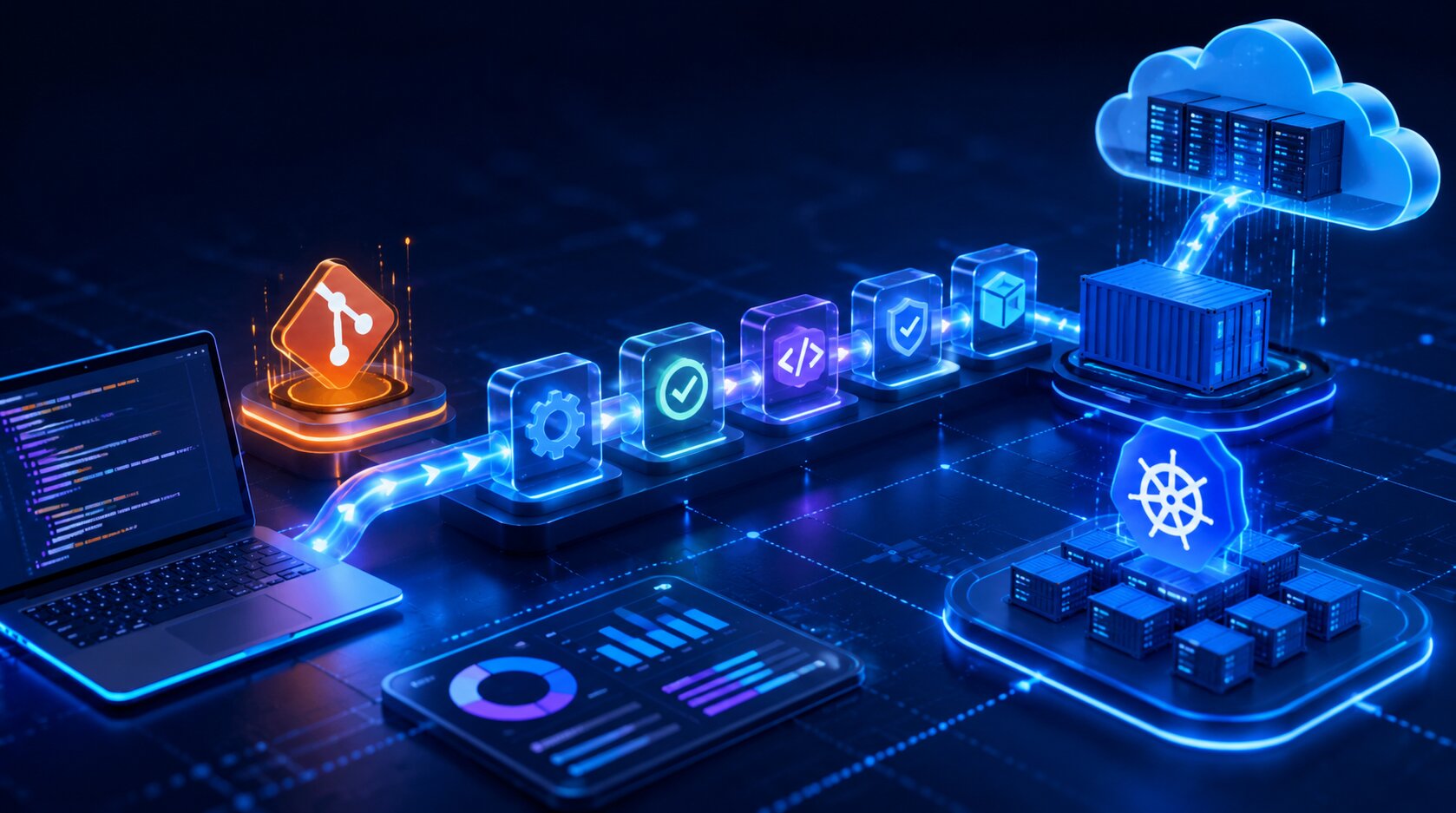
A CI/CD pipeline is a structured automation workflow that moves software from source code to production deployment. Instead of manually building, testing, and deploying applications, teams define automated stages that execute whenever code changes are pushed.
A typical CI/CD pipeline includes:
- Source code retrieval
- Dependency installation
- Code compilation
- Automated testing
- Security scanning
- Container image creation
- Infrastructure deployment
- Production release
This workflow dramatically reduces manual effort while improving consistency across development environments.
CI/CD Pipeline Generator: Automate Pipeline Configuration in Minutes
One of the biggest challenges for development teams is creating pipeline configurations from scratch. YAML files, deployment stages, environment variables, secrets management, and deployment strategies require careful configuration.
The CI/CD Pipeline Generator helps developers automatically generate production-ready pipeline configurations without manually writing every stage.
Instead of spending hours building deployment workflows, teams can quickly generate standardized pipelines that follow DevOps best practices.
Common pipeline components generated include:
- Build stages
- Testing workflows
- Artifact generation
- Container image builds
- Deployment stages
- Environment management
- Rollback workflows
This allows engineers to focus on product development rather than repetitive infrastructure setup.
How Automated CI/CD Pipelines Improve Developer Productivity
Manual deployment processes often become bottlenecks as development teams grow. Every manual step introduces additional complexity and opportunities for human error.
Automated pipelines eliminate many of these challenges by ensuring deployments follow predefined workflows.
Developer productivity improves because:
- Fewer manual deployment tasks
- Faster testing cycles
- Automated validation checks
- Consistent deployment processes
- Reduced troubleshooting time
Teams spend less time managing deployments and more time creating customer-facing features.
Best CI/CD Pipeline Practices for Modern Engineering Teams
Successful DevOps organizations follow a set of proven CI/CD practices that improve reliability and scalability.
These practices include:
- Automated unit testing
- Automated integration testing
- Infrastructure as Code
- Containerized deployments
- Automated rollback strategies
- Continuous monitoring
- Security scanning during builds
By combining these practices with automation tools, organizations can dramatically improve software delivery performance.
CI/CD Pipeline Examples for Real-World Applications
Different projects require different pipeline structures depending on application architecture and deployment targets.
Common pipeline examples include:
Web Application CI/CD Pipeline
- Code checkout
- Dependency installation
- Automated tests
- Build process
- Production deployment
Containerized Application Pipeline
- Source retrieval
- Container image build
- Container security scan
- Docker registry push
- Kubernetes deployment
Microservices Deployment Pipeline
- Service build
- Unit testing
- Container packaging
- Artifact publishing
- Independent service deployment
A pipeline generator helps standardize these workflows and reduce configuration complexity.
CI/CD Pipeline Automation for Kubernetes and Cloud Deployments
Cloud-native applications increasingly rely on Kubernetes, containers, and infrastructure automation. Modern deployment workflows must integrate seamlessly with these technologies.
Pipeline automation helps teams:
- Deploy Kubernetes workloads
- Manage container images
- Handle environment configurations
- Automate cloud releases
- Scale deployment workflows
As organizations adopt cloud-native architectures, automated pipelines become even more important.
Why DevOps Teams Are Using Pipeline Generators
Pipeline generators provide a practical solution for reducing repetitive configuration work while maintaining consistency across projects.
Advantages include:
- Faster setup times
- Standardized configurations
- Reduced deployment errors
- Easier onboarding for new developers
- Improved DevOps maturity
Rather than reinventing deployment workflows for every project, teams can generate proven configurations and customize them as needed.
The Future of Software Delivery Is Automation
Software development is increasingly driven by automation. From infrastructure provisioning and container orchestration to testing and deployment, modern engineering teams rely on tools that eliminate repetitive tasks.
CI/CD pipeline generators represent an important step toward fully automated software delivery. As development cycles accelerate, automation becomes critical for maintaining speed, quality, and reliability.
Organizations that embrace deployment automation today are better positioned to scale their products and engineering teams tomorrow.
Related Topics
- Continuous Integration Best Practices
- Continuous Deployment Strategies
- DevOps Automation Tools
- Infrastructure as Code Workflows
- Kubernetes Deployment Automation
- Containerized Application Delivery
Conclusion
Modern software delivery requires speed, reliability, and consistency. Manual deployment processes can no longer keep pace with the demands of modern engineering organizations.
The CI/CD Pipeline Generator helps development teams automate deployment workflows, accelerate release cycles, and improve DevOps efficiency.
Whether you are building cloud-native applications, SaaS platforms, enterprise software, or microservices architectures, automated CI/CD pipelines provide the foundation for scalable software delivery.
Popular Posts

Popular Tools